Crypto Facto FintechAsia Net: A Complete Guide to Asia’s Fintech, Crypto & Telecom Convergence
The words fintechasia net crypto facto, and Telekom have been showing up together a lot in search trends lately, and for good reason. Asia’s financial technology landscape is going through a rapid transformation, one where cryptocurrency, mobile telecom infrastructure, traditional banking, and digital-first economies are colliding to create entirely new ways of moving and managing money.
This article breaks down what these terms generally refer to, why they’re trending, and what they signal about the direction of fintech across Asia. Whether you landed here searching for fintechasia .net crypto facto, fintechasia telekom, or hdfc fintechasia net, you’ll find a structured overview below covering each angle.
FintechAsia.net appears to be an aggregator of news and opinions on fintech, crypto, and telecom-related topics. As always, with any aggregator and new platform, things may be subject to rapid change. We strongly advise confirming any information, particularly information related to banking or telecommunications, with credible sources.
What Is Crypto Facto in the FintechAsia Context?
Crypto Facto is not a formal financial or legal term. In the FintechAsia environment, it could be interpreted as a description of the increasing practical significance of cryptocurrency in the modern financial technology field. The use of various crypto-related means like digital wallets, stablecoins, blockchain payments, and crypto transfers becomes an element of the larger ecosystem of fintech. It represents the tendency to explore digital assets together with traditional financial services.
The connection between cryptocurrency and fintech in Asia can be observed in spheres like cross-border payments, remittances, digital money transactions, and blockchain-based financial services. At the same time, the regulation of cryptocurrencies varies in each particular state, which is why all crypto-related services cannot be considered official and protected by the state. It is important to learn about the technology, regulations, and financial platforms to use crypto services.
FintechAsia .net Telekom: Why Telecom Companies Are Becoming Financial Players
Telecom companies are becoming increasingly connected with financial technology as mobile phones and digital services become a central part of everyday life. Telecom companies in Asia are investigating various financial services, including mobile wallets, digital payments, transfer services, and other tools of that kind. These companies already have mobile networks and a lot of customers. Thus, they have the ability to provide their services to people who do not have access to traditional banking services.
This combination of telecommunications and fintech services may be an important step towards financial inclusion, but at the same time, it may be an additional competitor for traditional banks. Financial services that are available through telecommunications also require appropriate regulation and security. There are some differences between countries in terms of financial services and regulations. Thus, it is important to know the official information about these issues.
FintechAsia FTAsiaEconomy Tech Updates: Tracking the Bigger Picture
The ftasiaeconomy tech updates search variant points to a broader interest in macro-level fintech and tech-economy news across Asia, not just individual products, but the systemic shifts shaping the region’s digital economy. Some of the recurrent themes include:
- Pilots of Central Bank Digital Currency (CBDC): Many Asian economies have been actively conducting pilots of their respective digital currencies and even scaling up the project from payments to settlement.
- QR Payment Interoperability Across Borders: Efforts to connect national QR payment networks where wallets created in one country can be scanned and used in another have been the most significant infrastructure news.
- Regulation of Open Banking: Regulators in the region are trying to encourage banks to open their API services to enable fintech startups to develop using traditional bank rails.
- Credit Scoring Through AI: The information obtained through alternative sources like utility bills, e-commerce payments, and telecommunications usage is being used increasingly for decision-making for granting loans using AI.
- Green Fintech: Sustainability-focused lending and carbon tracking through fintech is emerging as an important niche within the industry, especially in places receiving heavy ESG investments.
Why Tech Updates Content Matters to Readers
For investors, founders, and everyday consumers, staying current on these macro trends isn’t just academic it shapes:
- Which markets are becoming friendlier or stricter for fintech startups
- Where venture capital is flowing within the region
- What kind of consumer protection provisions are being strengthened or falling behind innovation
Those searching for ftasiaeconomy tech news would most likely be seeking an ongoing update of such trends rather than in-depth analysis of just one, which explains why aggregator-type reporting on such trends usually works well.
HDFC FintechAsia Net: What the Search Trend Actually Reflects
HDFC FintechAsia Net appears to associate searches for HDFC Bank with wider discussions on fintech, digital banking, and financial technology in Asia. HDFC Bank is one of the major private banks of India and has paid considerable attention to digital banking. Nonetheless, the linking of all these terms in search queries does not necessarily mean that there exists any partnership or association between HDFC Bank and FintechAsia.net.
When any assertion is made concerning partnership, financial instrument, investment, or official announcements by HDFC Bank, then it would be prudent for the readers to visit the official website of HDFC Bank to confirm the same. This will help the reader not to confuse the association of online search results as factual evidence of financial or corporate dealings.
A Word on Verification
In case one is researching a certain claim relating to a particular bank and fintech platform, it is necessary to confirm the accuracy of the details from credible sources. The starting point may be the bank’s press releases or the investor relations section on their website, and then comparing the information with financial regulators. Websites and blogs may serve as a good starting point for research but should not be used as conclusive sources.
FintechAsia .net Start Me Up: Understanding the Startup Angle
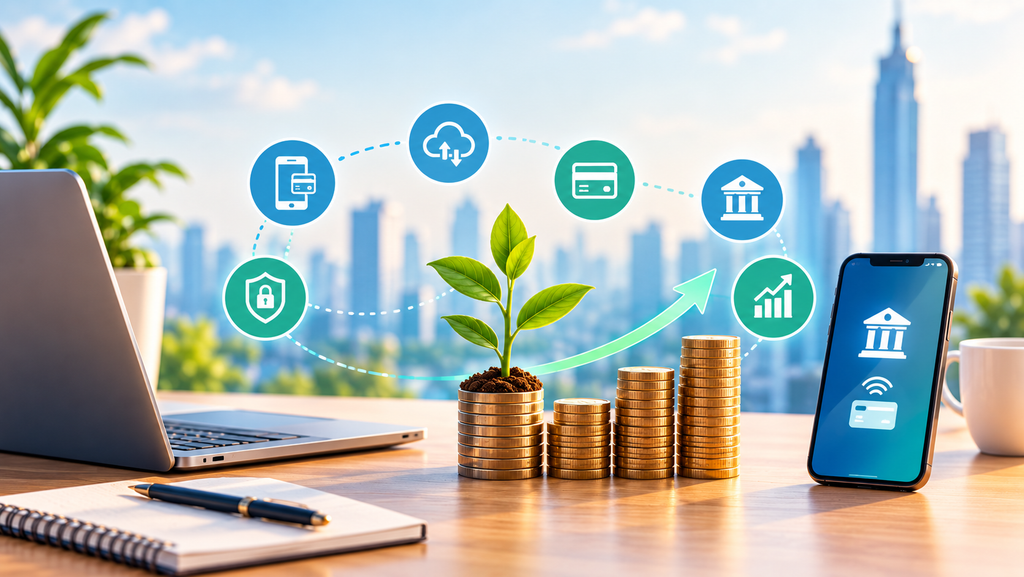
The Start Me Up phrasing points to another core pillar of FintechAsia-style content coverage of the fintech startup ecosystem itself. Funding rounds, new product launches, accelerator programs, and the general getting-started energy of the region’s fintech scene. Here’s what’s typically driving this narrative across Asia right now:
- Lower Barriers to Launch
Cloud-based technologies, BaaS, and open-source compliance solutions have made it possible for these organizations to create a fintech business at relatively low cost. Instead of creating their own complicated financial systems, fintech organizations can use API to take advantage of important features of banking and payments. This allows the founders to focus on their product without having to waste too much time and effort.
- Regional Funding Hubs
Singapore, India, as well as Vietnam and Indonesia recently, have turned into hotbeds for fintech venture capital investments. Each one is special in its own way:
- Singapore: Regulatory sandbox and international movement of capital
- India: Huge domestic adoption of digital payments through UPI
- Southeast Asia broadly: Huge underbanked populations representing greenfield opportunity
- Common Startup Categories Getting Attention
Various types of startups are receiving increasing focus due to the increased use of digital products and services by businesses and customers. Some examples include fintech startups, artificial intelligence startups, e-commerce startups, health tech startups, cybersecurity, and software startups. Such interest may be influenced by changes in consumer demands and technology as well as the desire for convenience. Nonetheless, popularity is not enough for a startup to succeed in the long run, which is why readers are supposed to analyze its business model and other factors.
- What Starting Up Really Requires Today
And for entrepreneurs who are drawn to such a trend, here is what their checklist will look like:
- Map the regulatory landscape in your target market first. Fintech is one of the most heavily regulated startup categories
- Decide build vs partner for core banking payment rails
- Nail down a compliance and KYC AML strategy from day one, not as an afterthought
- Choose 1–2 markets to prove product-market fit before regional expansion
- Build trust signals early. Security certifications, transparent fee structures, and responsive support matter enormously in finance
Putting It All Together: Why These Terms Cluster
The terms crypto facto fintechasia net, fintechasia .net telekom, ftasiaeconomy tech updates, hdfc fintechasia net, and intechasia net start me up may appear together because they relate to different parts of the same broader fintech story. Cryptocurrencies are an example of the increase in the use of digital currencies. Telecom providers are venturing into financial services. Existing banks are utilizing technology, and startups are developing new financial services. All these are examples of how technology is impacting the availability, usage, and transactions of money across Asia.
The link between these two issues is what makes these issues relevant to consumers, businesses, investors, and people involved in the finance industry. As digital payments, mobile banking services, blockchain technology, and startup innovations are continuously evolving, the differences between traditional banking institutions, telecommunication services, and technology are increasingly disappearing. However, there are varying regulations in various countries. Whatever data you get about any company, financial service, product, or collaboration must be authenticated from trusted sources.
Frequently Asked Questions
1. What does crypto facto fintechasia net actually mean?
It’s not an official term or product name. It’s best understood as shorthand for how cryptocurrency has become a de facto informal but real part of everyday fintech activity in Asia, even in markets where crypto isn’t yet formally regulated. Stablecoin settlements, crypto-linked remittances, and merchant crypto acceptance are common examples.
2. Is FintechAsia.net an official financial institution or regulator?
No. According to the information at hand, the website acts as an aggregator of financial technology, crypto, and telecom news and commentary, and not a bank or regulator. Any claim made about a financial matter should be verified with the respective company or regulator.
3. What is FintechAsia Telekom referring to?
It is a wider phenomenon where telecom companies are now providing various financial services such as mobile wallets, SIM-based savings accounts, and telecom data-based microloans, in which phone numbers are becoming informal bank accounts.
4. Is there an official partnership between HDFC Bank and FintechAsia.net?
The lack of credible official documentation proves that there is no official partnership between HDFC Bank and FintechAsia.net. HDFC FintechAsia.net search trend shows interest in the collaboration of big banks like HDFC with the news about fintech. Please refer to the official HDFC Bank website for credible information.
5. What does ftasiaeconomy tech updates cover?
This search variant points to broader macroeconomic and technology news across Asia’s digital economy topics like CBDC pilots, open banking regulation, cross-border QR payment interoperability, and AI-driven credit scoring rather than a single company or product.
6. Is cryptocurrency legal to use in all of Asia?
Not at all, since there are very large differences in the legality of cryptocurrencies across Asia. From countries that have full legislation on cryptocurrencies to countries that have restrictions or even prohibit them entirely, each one is different.
7. What does FintechAsia net Start Me Up mean?
It reflects the startup-ecosystem angle of fintech coverage, including funding rounds, new fintech product launches, accelerator programs, and general how-to-get-started content for founders entering Asia’s fintech space.
8. Is it wise to trust aggregator websites for financial advice?
Aggregator and blog-like fintech news websites can help you learn about upcoming trends, but you should not depend on them as the sole provider of financial advice. It is always necessary to verify any information, particularly when it concerns named banks or promised gains.
Final Thoughts
No matter what particular website or key phrase led you here, the broader narrative certainly deserves some consideration. It’s not just the fact that Asia is implementing fintech advancements invented somewhere else. It’s that many of the models being copied mobile-first banking, telecom wallet services, cross-border QR payment systems actually originated there.
If you’re an end user, the message is clear. Embrace these innovations, but check out the facts yourself, particularly anything relating to specific banks, legal compliance, and promises of returns on investments. If you’re a founder or venture capitalist, then the combination of high mobile penetration rates, unbanked or underbanked populations, and increasingly favorable regulations should make this region one of the most attractive fintech narratives going forward. See More!